2610 East 32nd Street
Date
2021Category
Commercial Real Estate,
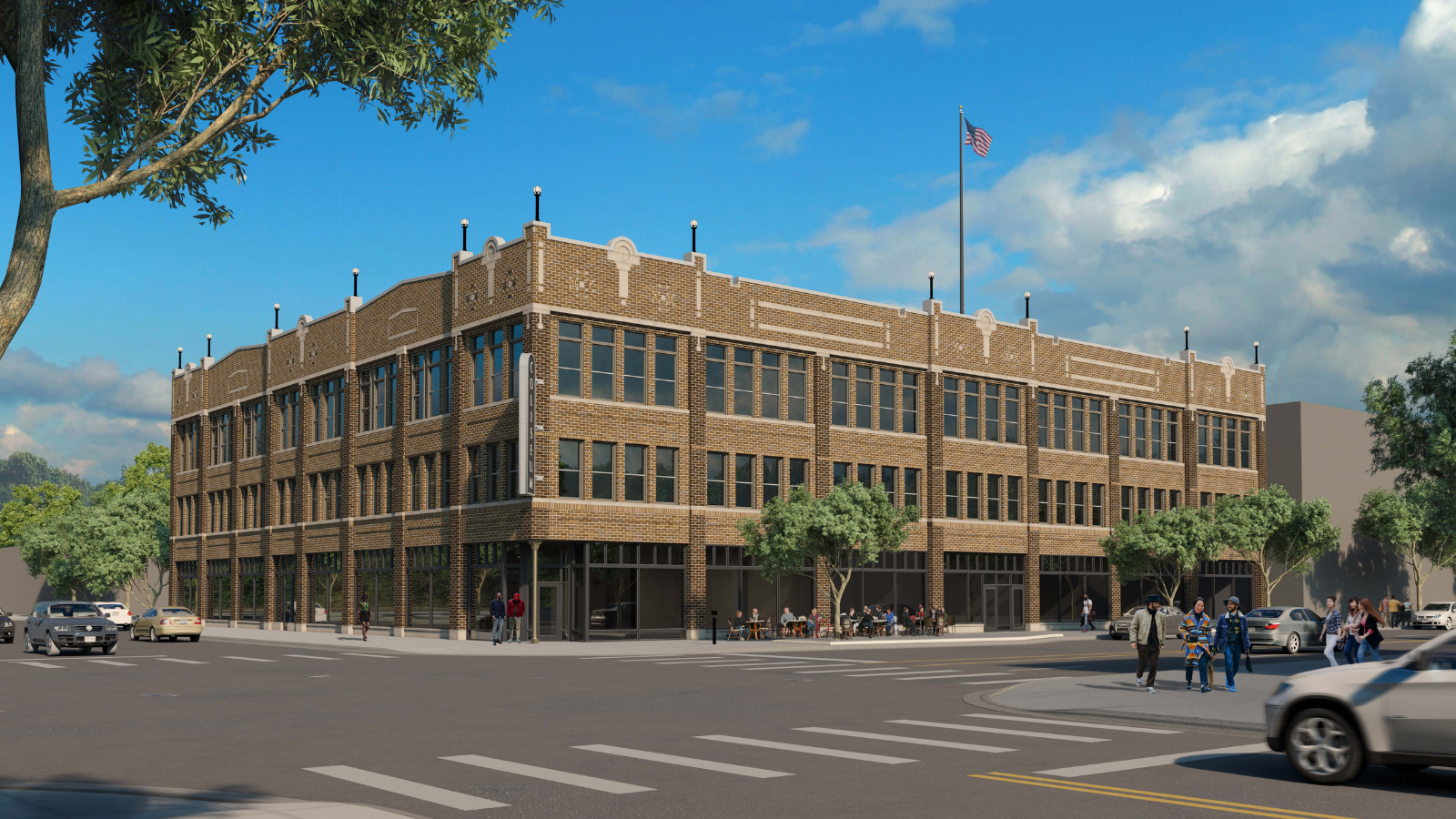
The building at 2610 East 32nd Street has been woven into south Minneapolis’ industrial and commercial landscape since it was constructed in 1901. Its large footprint, high ceilings, and flexible interior made it well-suited for production, fabrication, and community-oriented uses over time.
Redesign acquired the property from Motoprimo in 2013 as part of its strategy to preserve and activate commercial space in Greater Longfellow and to support local entrepreneurs with affordable, adaptable space. Early concepts for the building included an innovative plan to convert the garage-door bays into shared food truck kitchens. While that concept ultimately evolved, the idea of flexibility and shared opportunity continued to shape the building’s use.

Redesign’s vision for 2610 East 32nd Street was to create a community-serving commercial hub where locally rooted, mission-driven businesses could grow, collaborate, and respond to changing neighborhood needs.
From the beginning, this vision extended beyond tenanting and into shared ownership and relationship-based development. The acquisition of the building marked Redesign’s first experience purchasing a property in partnership with a community entrepreneur, entering into a 50/50 ownership structure with Worku Mindaye, owner of Shega Foods. This partnership grew out of years of technical assistance and relationship-building prior to acquisition, and it fundamentally shaped Redesign’s approach to future development.

Rather than pursuing a single-use redevelopment, Redesign focused on maintaining adaptable space that could support production, nonprofit work, creative enterprise, and wellness services side by side. But equally important was the recognition that ownership itself is a tool for economic justice. By sharing ownership with a community entrepreneur, Redesign deepened its expertise in collaborative development models, building the trust, capacity, and systems needed to structure equitable partnerships.
This experience proved pivotal. The lessons learned at 2610 East 32nd Street helped inform Redesign’s ability to enter into more complex community ownership models in later projects, including The Historic Coliseum Building and Wadaag Commons. It demonstrated that long-term, values-aligned partnerships, grounded in patience and mutual accountability, could unlock development opportunities that traditional real estate models overlook.
That vision proved especially critical during moments of crisis, when flexibility, patient ownership, and strong relationships allowed the building and its tenants to respond quickly and meaningfully.
Over time, 2610 East 32nd Street has become a powerful example of community resilience in action.
A cornerstone tenant, Du Nord Craft Spirits, operated from the building and gained national recognition as Minnesota’s first Black-owned distillery. In response to urgent public health needs in 2020, Du Nord rapidly pivoted production to manufacture hand sanitizer during the early days of the COVID-19 pandemic. That same year, Du Nord launched the Du Nord Foundation, expanding its mission to include disaster relief, racial equity, food security, and economic development. Eat for Equity also operated from the building during this period, and worked to assemble meal boxes and distribute food when access and stability were deeply disrupted.
During the uprisings following the murder of George Floyd by Minneapolis Police, the building sustained significant fire damage. In the aftermath, tenants, Redesign, partners, and the broader community came together to clean up, rebuild, and continue using the space in service of community needs.
2610 has housed a diverse mix of mission-aligned tenants, including Shega Foods, an Ethiopian food company producing culturally rooted products and creating pathways to entrepreneurship in the local food economy, and Memorialize the Movement, an arts- and memory-based initiative preserving the stories, demands, and lived experiences emerging from the 2020 uprising.
This building has also provided long-term space for local mental health therapists and, following the destruction of their building in 2020, Migizi Communications found a temporary home here as well, enabling the organization to continue serving Native youth during a period of profound loss and transition.
Together, these tenants reflect Redesign’s core belief that commercial buildings can serve as anchors for healing, creativity, cultural preservation, and economic justice. Especially during moments of crisis and recovery.